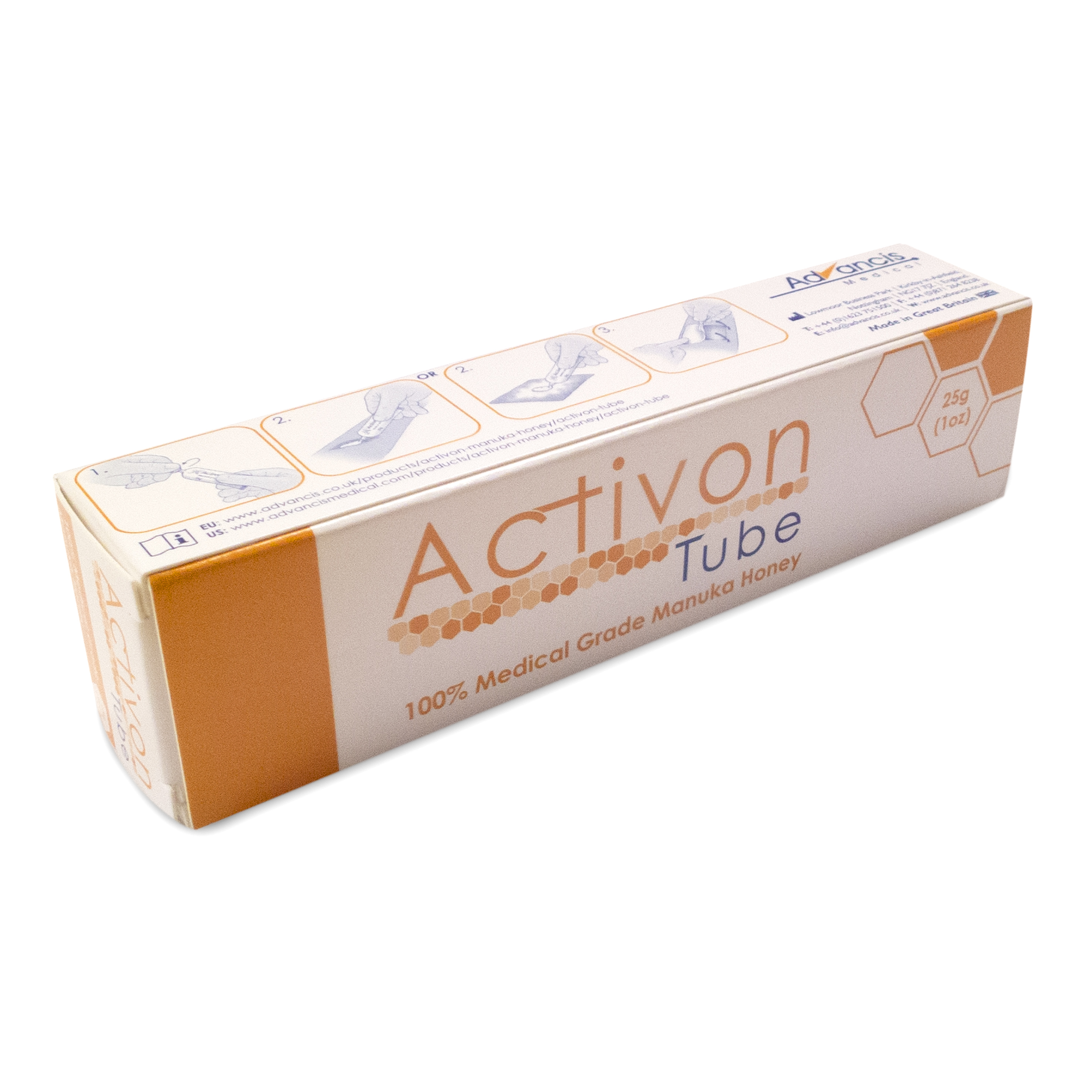
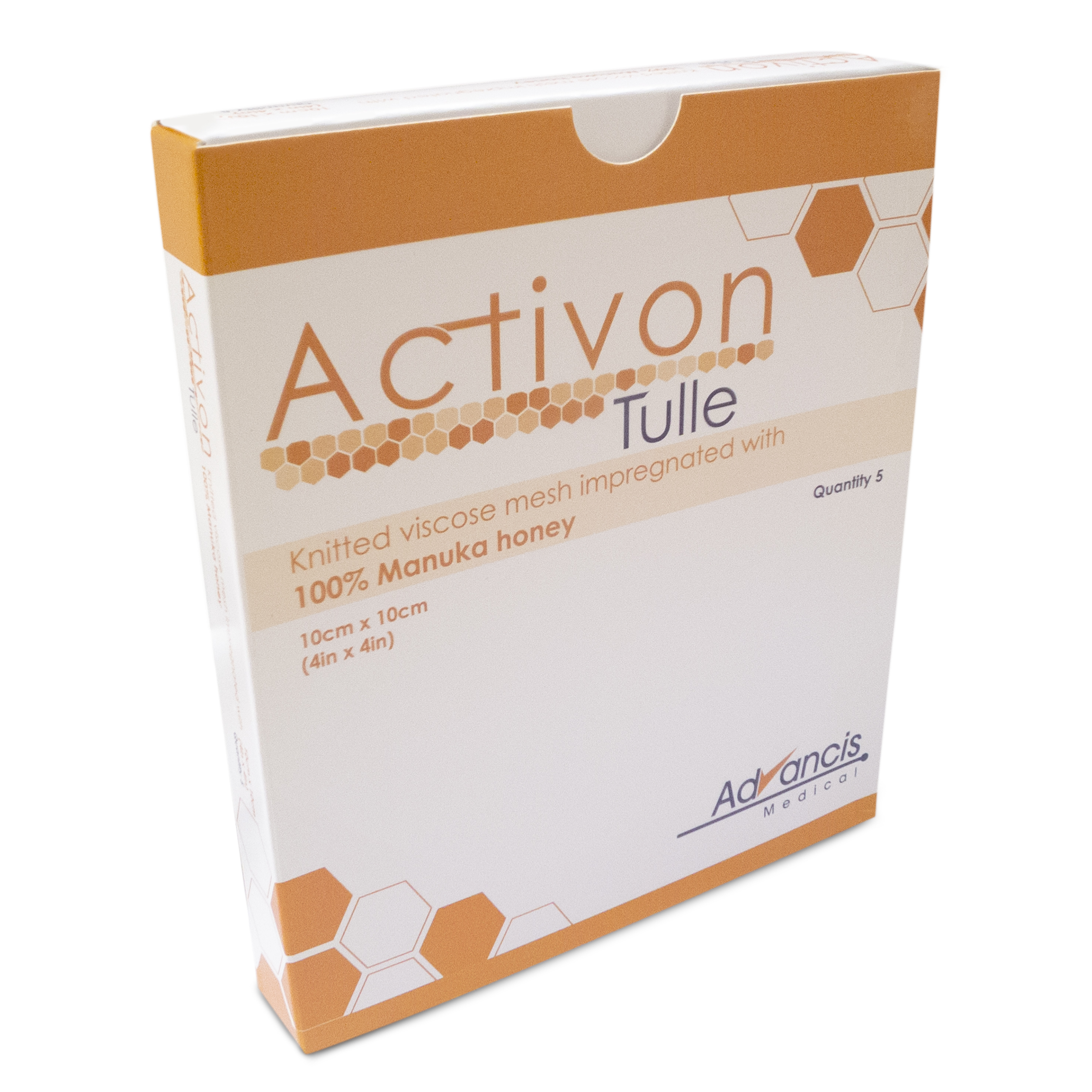
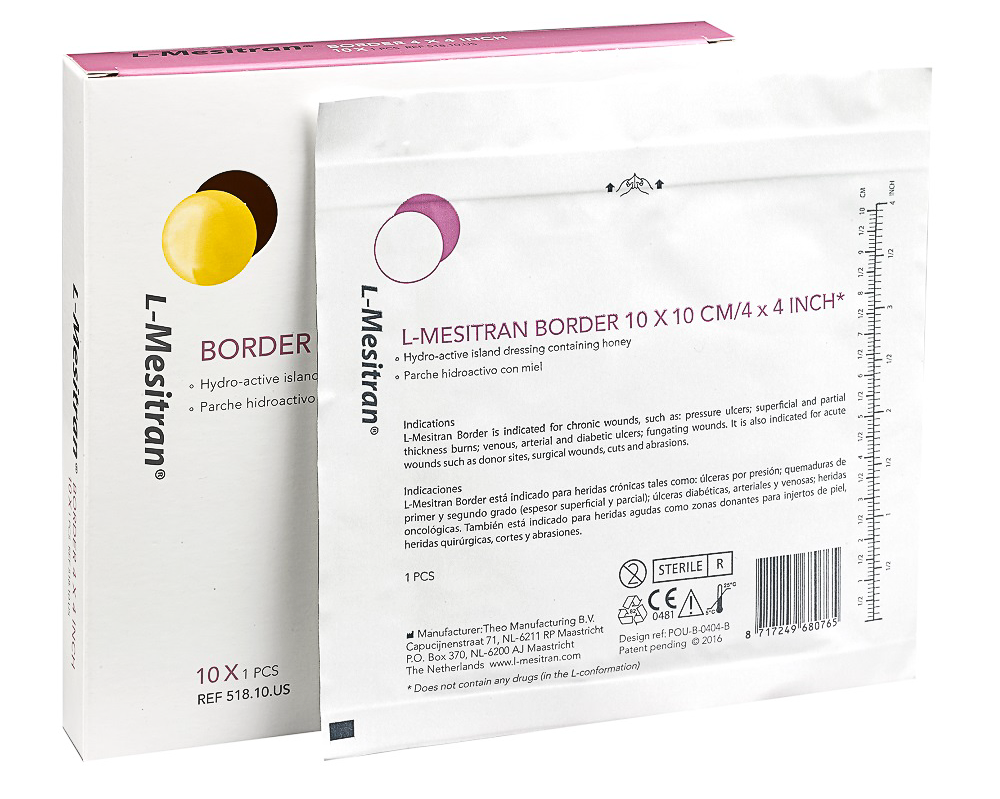
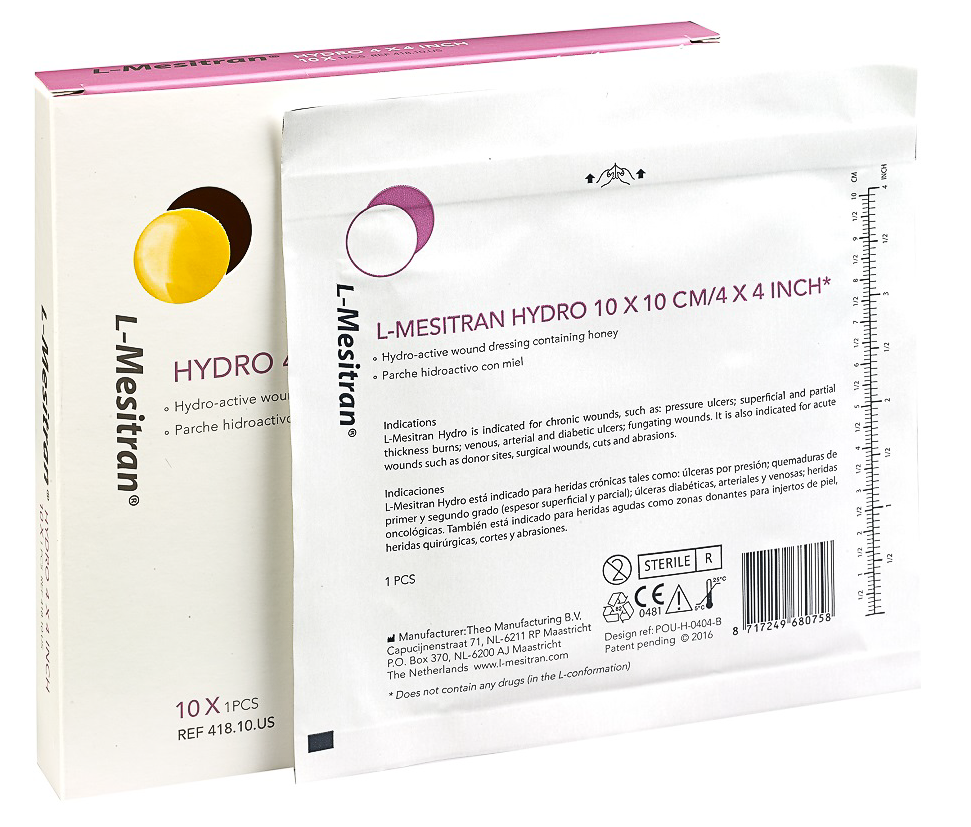
Honey based topical wound gel
Superficial wounds; abrasions; infected wounds; burns; pressure ulcers; leg ulcers; diabetic foot ulcers; sloughy wounds; necrotic wounds; malodorous wounds; surgical wounds; donor and recipient graft sites. Can also be used as a skin barrier to avoid maceration and as a hydrating agent for dry peri-wound skin.
Allergy to bee venom
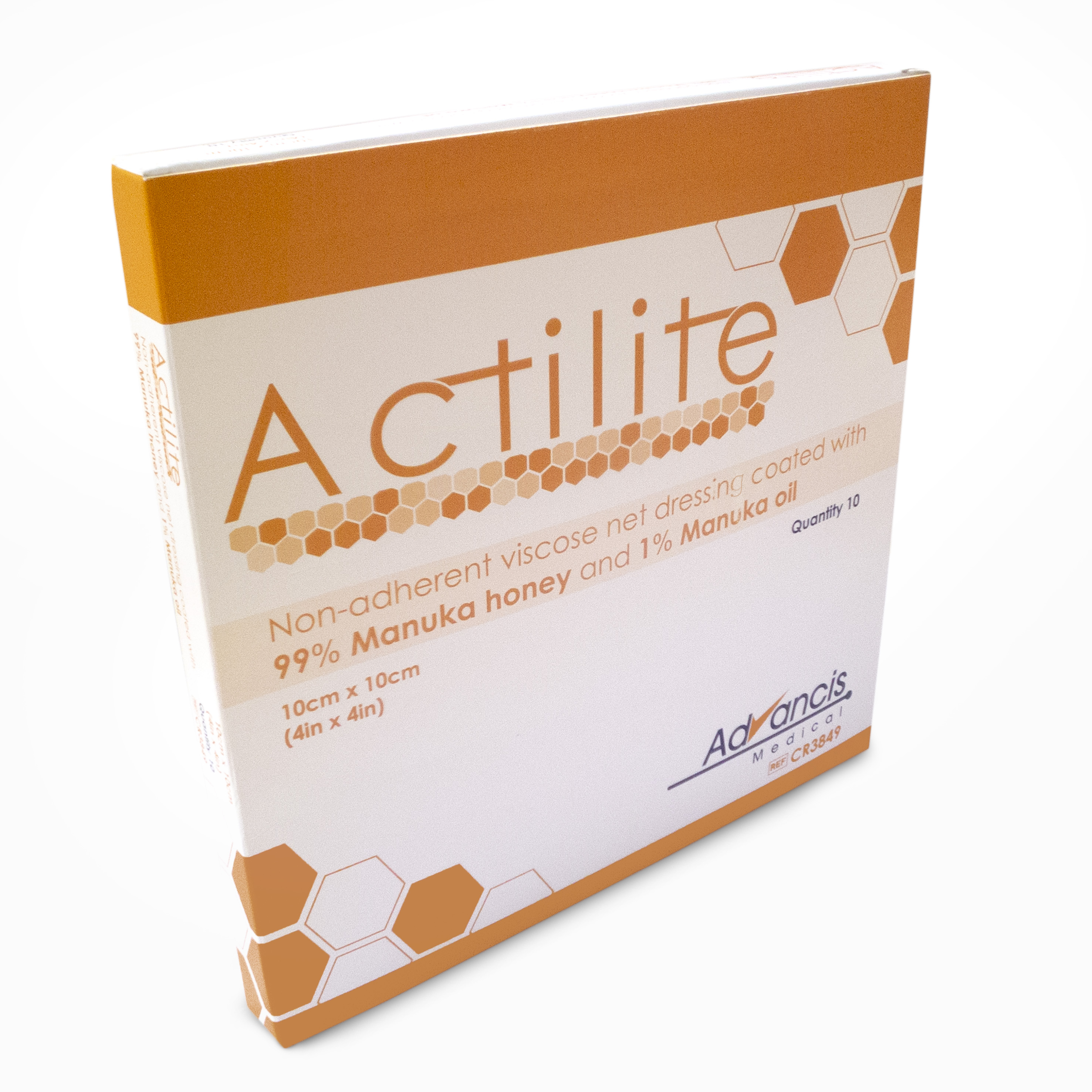
Viscose net dressing coated with 100% manuka honey and manuka oil (ratio of 99% honey to 1% oil)
100% medical-grade manuka honey
Knitted viscose mesh impregnated with 100% manuka honey
Hydroactive, low-adherent, antibacterial honey-containing dressing with an adhesive film border. This sterile, semipermeable dressing contains 30% honey, as well as an acrylic polymer gel and water, and a polyurethane film backing. The honey-hydrogel pad rehydrates dry tissue and absorbs low levels of exudate.
Hydroactive, low-adherent, honey-containing dressing. Sterile, semipermeable dressing contains 30% honey, acrylic polymer gel and water, with polyurethane film backing. Honey-hydrogel pad donates moisture to rehydrate dry tissue and absorbs low to moderate levels of exudate.
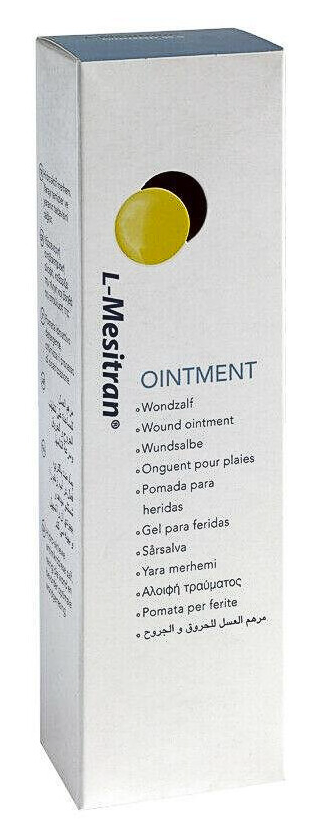
Antibacterial ointment with 48% medical-grade honey, containing medical-grade hypoallergenic lanolin (Medilan), sunflower oil, cod liver oil, Calendula officinalis, Aloe barbadensis, vitamins C and E, and zinc oxide. Single-patient multi-use.