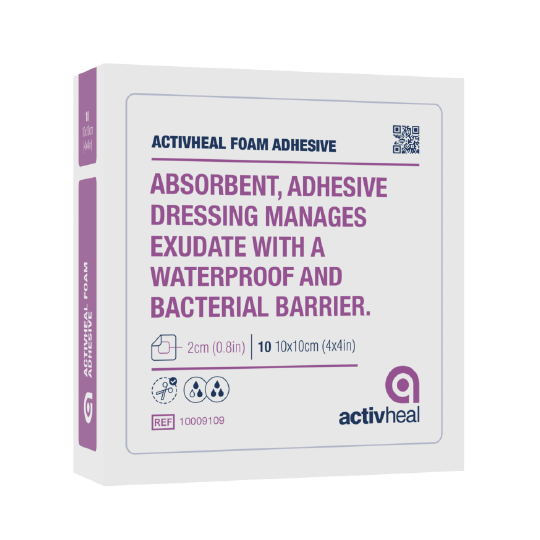
A two-layer dressing consisting of a polyurethane bacterial barrier membrane with a centrally located hydrophilic pad and an acrylic adhesive border
Moderately to heavily exuding chronic wounds. Can be used throughout the healing process on the following wounds: pressure ulcers, venous leg ulcers, diabetic foot ulcers, lacerations, adhesions, graft and donor sites, postoperative surgical wounds, superficial- and partial-thickness burns. Can be used on cavity wounds as a secondary dressing and under compression bandages.
Surgical implantation. Do not use on individuals with a known sensitivity to polyurethane films, foams or acrylic adhesives. Do not use with oxidising solutions such as a hypochlorite or hydrogen peroxide, as these can break down the absorbent polyurethane component of the dressing.
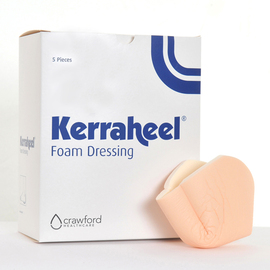
Sterile hydrocellular heel dressing with a vapour-permeable, waterproof and bacteria-resistant polyurethane film
Self-adhering open-cell foam designed to protect skin from splints, casts and prostheses. Lightweight and conformable. Can be cut, layered and shaped. Not intended as a pressure-reducing device.
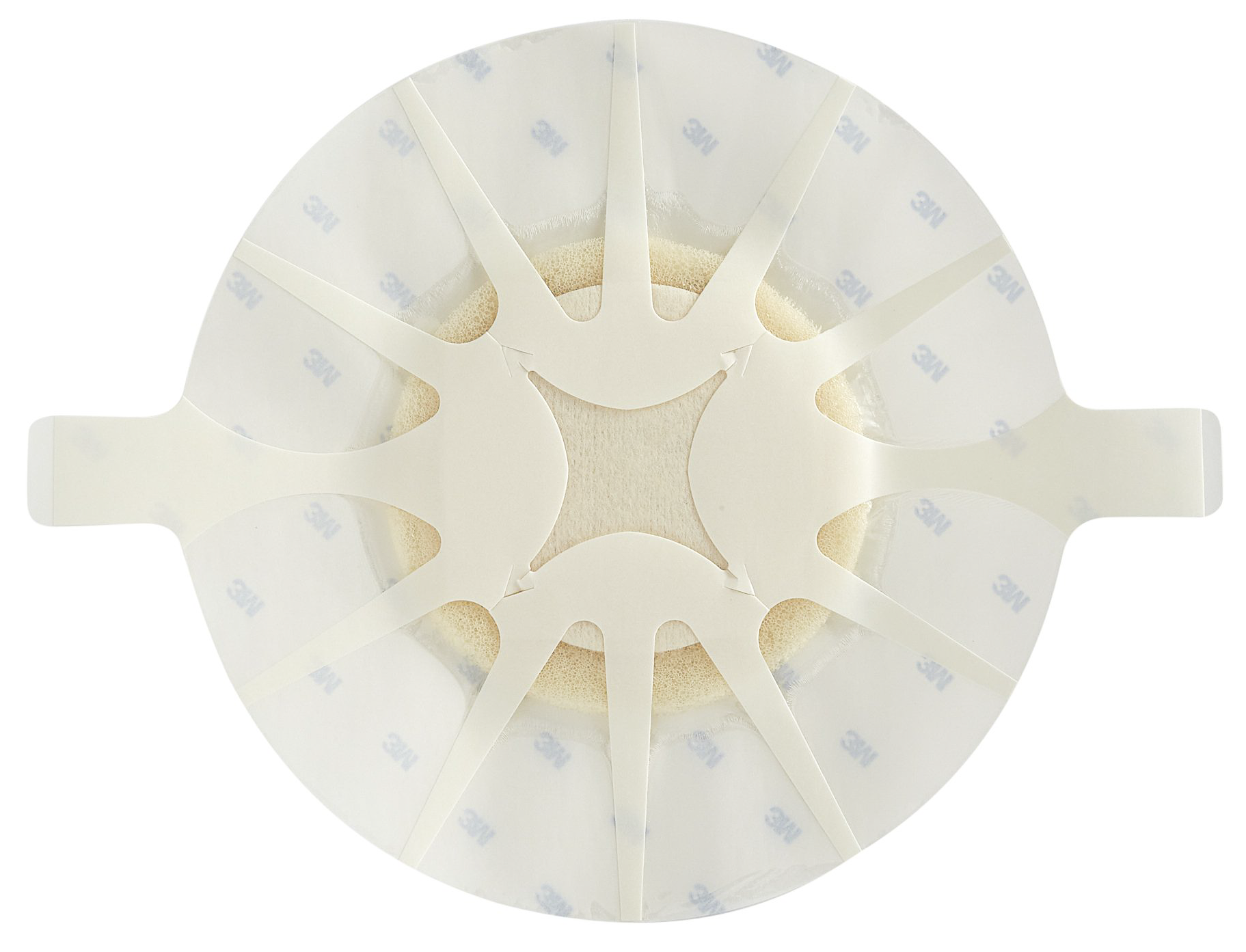
Highly absorbent polyurethane foam dressing with semipermeable film backing layer. 3M logos indicate upper surface of dressing. Available in a variety of sizes and styles. Suitable for use under compression.
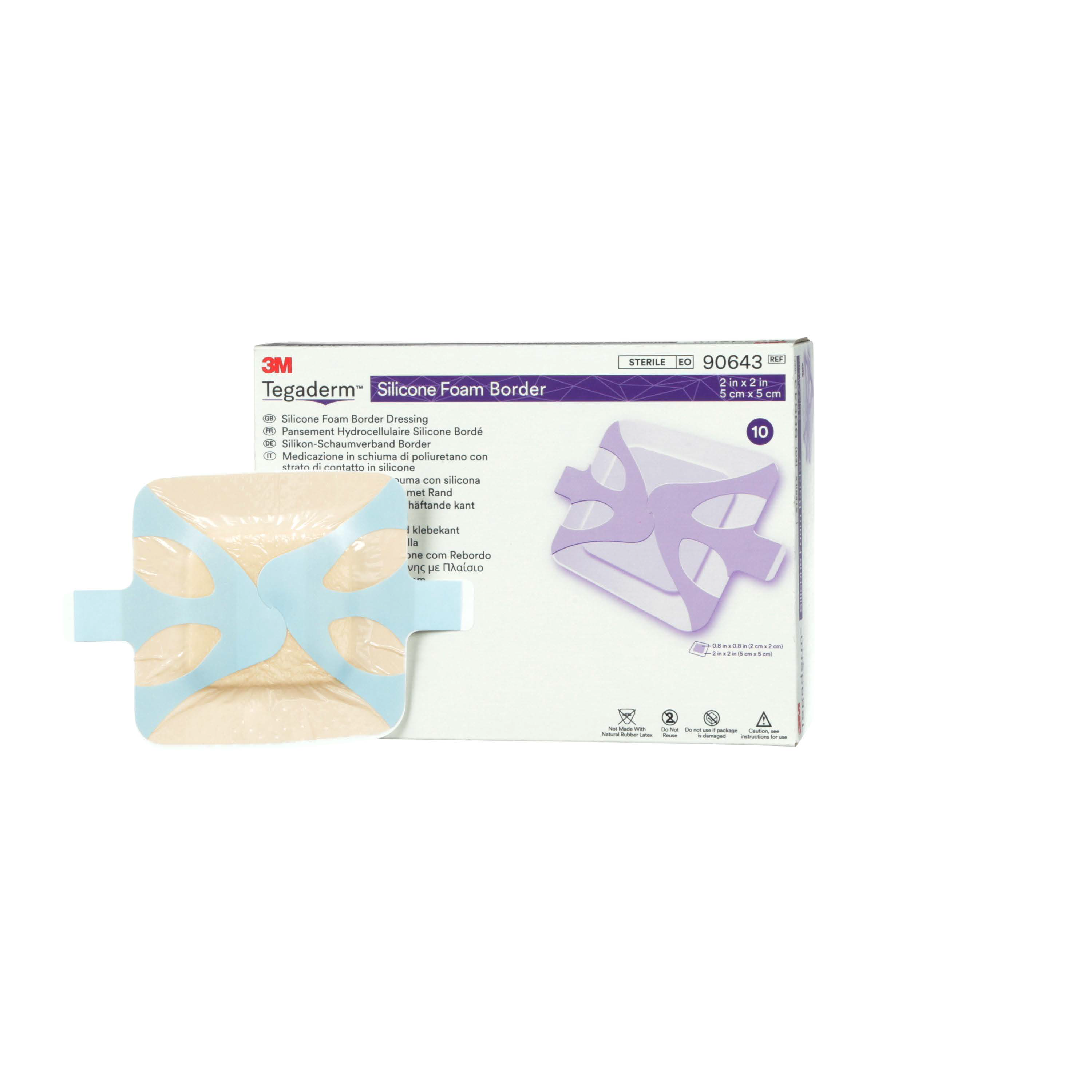
Highly absorbent polyurethane foam dressing with semipermeable film backing layer and adhesive border. Comprises four layers for high fluid absorption. Adapts to changing fluid levels in the wound to create a moist environment that promotes healing.
Silicone adhesive wound dressing
Stays in place with minimal lifting and rolling. It is an appropriate choice for your wound management and pressure injury prevention programs. Gentle even on fragile skin and does not cause damage to the wound, periwound or surrounding skin. It can be used with compression therapy and is designed to manage varying levels of exudate, from low to high.